
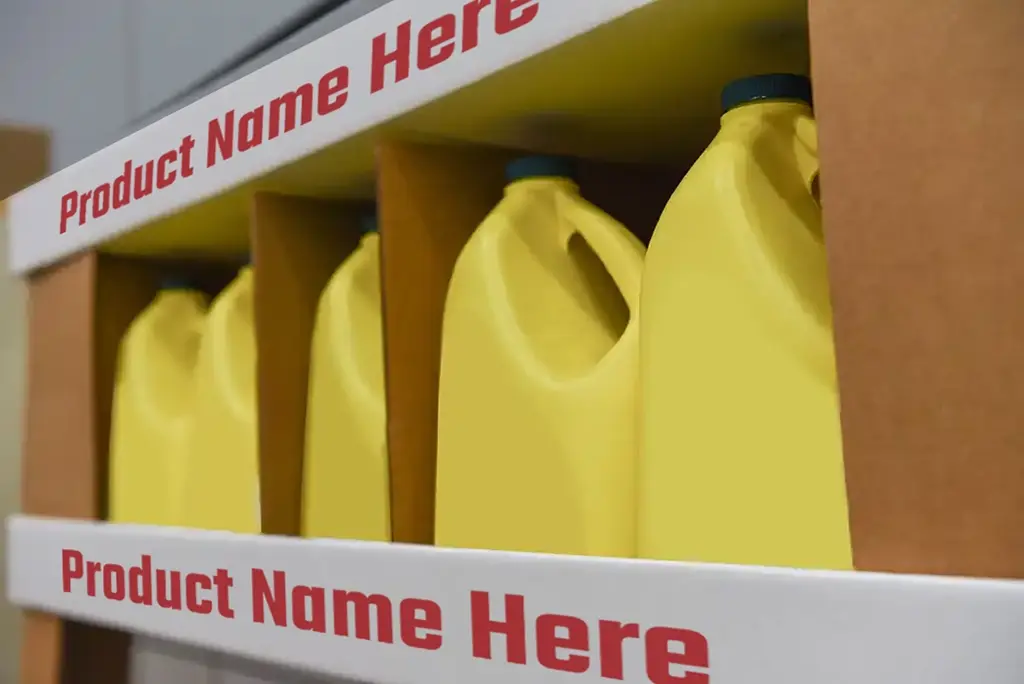
Effective Retail Marketing Displays
Effective retail marketing displays can:
- Increase impulse buys
- Prompt cross-sells, and
- Enhance brand awareness.
Boost your sales with these 15 tips for attractive product retail displays that sell more products.
1
Save money on your custom retail displays.
The cost of your custom retail display will directly depend on the cost of the materials you use. The per-unit costs of custom corrugated point-of-purchase (POP) displays are typically much less than acrylic, wood, or other materials.
2
Speak the language of the retailer.
Retailers often have different names that they favor for very similar, or even identical, types of displays.
For example, stores refer to virtually identical retail displays with the following terminology.
- Power Wing Display or Mini Wing Display (CVS)
- PDQ Sidekick Display (Walmart)
- Side Cap Display (Home Depot or Lowes)
- Fast Track Displays (Meijers)
Some allow advertising headers above or inside panels with messages.
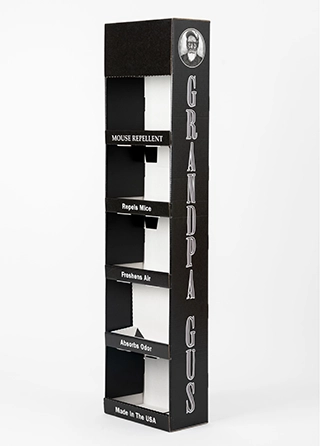
A power wing display, such as this one, is known by many different names, depending on the retailer.
3
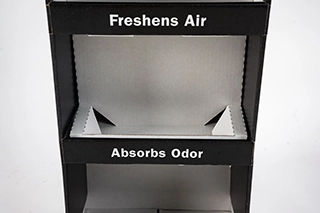
This sidekick display has four shelves. It stored both 4- and 8-oz. bottles as well as bags of products. It was 15 inches wide and nearly 4 feet tall.
Comply with the retailer’s display standards and specifications.
To showcase your products, choose a custom display that perfectly fits your product offerings—not a ready-made shelf or bin. This will not only display your products in the best light, but it will also ensure that you comply with each store’s standards.
That’s because each store not only has unique names for similar retail displays, but they also have unique display standards and specifications.
For example, the aforementioned displays range from 14 to 16 inches wide and four to six inches deep. The Walmart half-kick display must measure 24 inches, and a full-kick display must span 48 inches. At CVS, smaller-width versions of displays for pharmacy applications are called mini-wings.
4
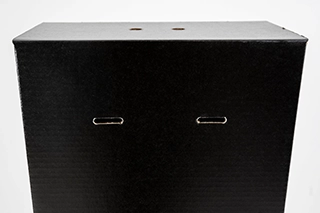
The sidekick display (shown here) has finger holes at the top to easily remove the retail display from the shipper box. The horizontal slots on the back are designed to hang from S-clips.
Know how you would like to arrange your product displays.
Overall, these same displays mentioned above can be configured in a variety of arrangements:
- Stacked on the floor
- Arranged on shelves
- Pegged
- Loaded into gravity bins
- Set on the counter
Know how your displays will be arranged.
5
Rely on structural designers to help you properly configure the retail display.
Provide complete product samples to our structural designers. Product samples help designers create the best retail displays. Design engineers will ensure that the corrugated boards and configuration are the right strength, size, shape, direction, and thickness to support your product.
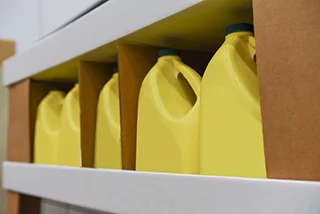
It’s helpful for retailers to provide product samples to assist in the structural design and manufacture of an attractive retail product display.
6
Remember K.I.S.S.—Keep it simple, “silly.”
Select a display that won’t require an engineering degree to assemble, is ready to use, or doesn’t need to be restocked frequently (or at all)—especially during today’s retail labor shortage.
7
Avoid clashes.
Be sure the colors you choose are appropriate within the store environment.
Elect for creative (pictures, colors, photos, etc.) that are relevant to the season. But don’t clash with the store’s colors.
Retailers usually have specific standards for seasonal products.
8
Go green.
Sustainability is an important reason to choose a corrugated style for your retail display. In a recent study, U.S. consumers reported they prefer sustainably packaged products.
Wertheimer retail displays and boxes are made from approximately 78% recycled corrugated materials, and the remainder is sourced responsibly.
According to Forbes, “Today, eco-conscious consumers are increasingly seeking brands that prioritize environmentally friendly practices, making sustainable packaging a crucial factor for business success.”
9
Brand, Brand, Brand.
Tell your consumers who you are with appropriate branding—colors, fonts, and messages. Be sure to keep your messages concise. As noted earlier, you must know where to place brand messages on your retail display.
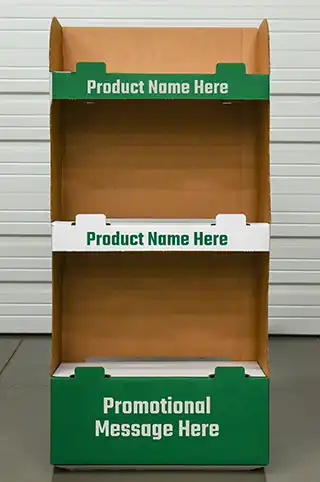
This retail display was designed for a popular snack food.
10
Be succinct.
According to Entrepreneur Magazine, humans now have attention spans of just eight seconds. (With nine-second attention spans, goldfish now surpass people.)
Since you’ll be selling to humans—and not goldfish—be sure to be a quick read. Fonts must be large enough to be legible with appropriate spacing and visual contrast.
Rely on a professional graphic designer for your display art.
In general, apply messages with only 50-75 characters (including spaces) per line, says the Baymard Institute.
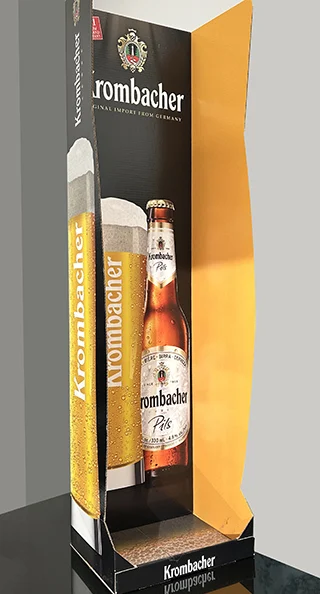
In this attractive retail product display, the cases were stacked from the bottom up.
11
Tout your greenness.
Remember to include brand messages that tout your use of recyclable packaging made from recyclable corrugated materials. Remind consumers that your company is environmentally friendly.
12
Go Phygital.
Consider pairing your in-store retail display with your digital marketing and online store—a phygital (physical + digital) trend.
Remember to take and post digital photos of your retail display—for online ads, social media, and website pages.
Proudly include your brand messages and showcase your products both online and on your retail display in the brick-and-mortar store. This will help close the loop of your customers’ phygital experience.
13
Go for the eyeballs.
Position your retail display where it will grab attention—usually at the shopper’s eye level. Consider the entryway (appetizer), main store (entrée), or checkout (dessert).
Sight is the sense we use most. Plus, the sight of the product can:
- Jog shoppers’ memories about needed items.
- Pique curiosity about products they’ve seen online or on TV.
- Prompt purchases shoppers may not have considered previously.
14
Be on the move.
Corrugated retail displays are lightweight and can be moved around the store. Test the optimal physical product placement within each store. Additionally, experiment with showcasing your products at different heights.
15
Be informed.
Read 8 tips for successful POP displays and avoid common potholes and pitfalls of POP displays.
Summary
Store displays help sell products. Rely on our experts to help you comply with store specifications, ensure your display’s proper strength and configuration, brand your display professionally, and optimize placement.
Contact Pat Delaney
At Wertheimer Box, we are resources of knowledge and experience in the retail display, packaging, and corrugated world. It is our privilege to be able to help customers get the maximum return on their products in any situation. No job is too big or too small.
Pat Delaney

Get More Industry News Like This
Welcome to the Wertheimer Family! We'd like to keep you up to date with industry changes and news. Subscribe to receive our occasional news, updates and articles direct to your in-box.